APRIL 2026 – There is a saying among pilgrims that “the Camino provides.” Whatever it is that you need, be it a bed for the night, a drink of water, a tough life lesson, or a good friend to talk to, the Camino puts it right there in front of you. I was 49 years old and I was doubting whether I should go and do the Camino de Santiago de Compostela.
I was thinking of walking from Porto in Portugal to Santiago and had been doing the research, creating an excel of daily kms and possible routes (Litoral v Central v Coastal), joining a variety of inciteful Facebook groups such as All Caminos and a group just for the Portuguese route and Camino Women over 50 (the If-they-can-do-it-I-can theory). I downloaded the Camino Ninja app and examined the various variants and accommodation options, which places were “not to be missed”, and what food to try (apparently Pastel de nata also known as Pastel de Belém is delicious). But could I really go? I have a husband and a teenage son that need me. I would be away for 3 weeks, it was too long. Who would walk the dog? Would the bathroom get cleaned at all during that time? Wasn’t it selfish of me to go away all the way to Europe on my own and leave my husband working while I just spent money? I wasn’t fit enough anyway. I have a dodgy knee, what if it bungs up on the first day and I can’t walk? I’ve spent all that money for nothing! And so on. I was talking myself out of it even though my husband fully supported my quest.
In the meantime, it was Easter week, so we went on a family holiday to the beautiful island of Florianópolis in Brazil. Just a short 16 hour drive away from where we live. As we were driving through to our accommodation, I spotted this:
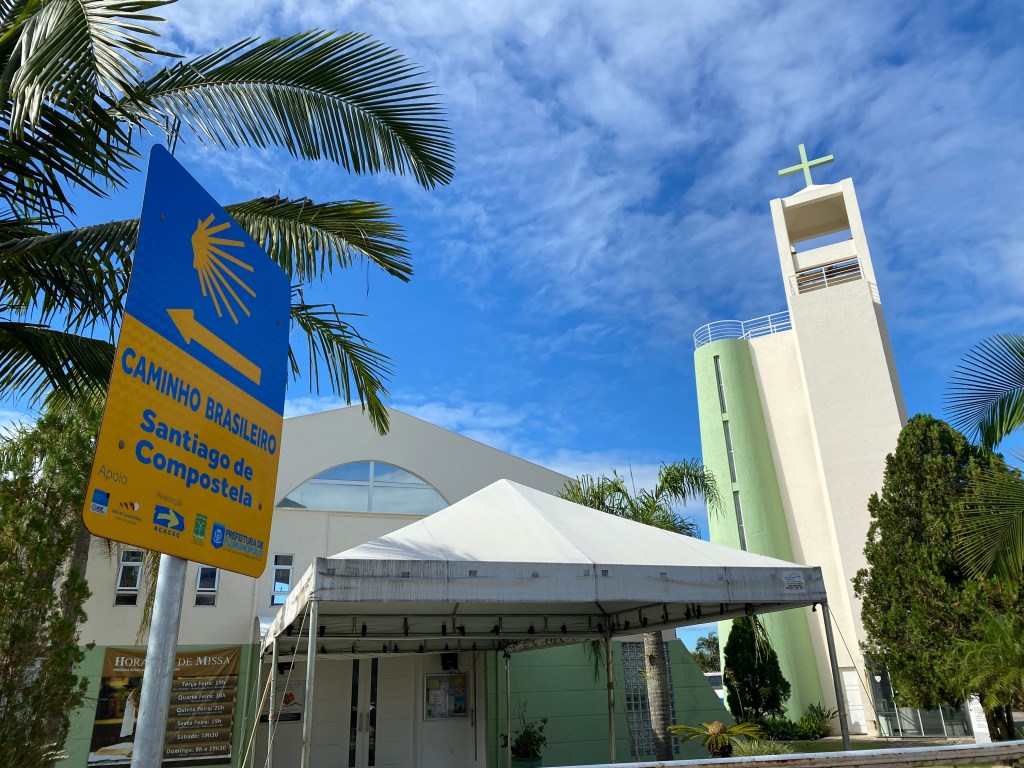
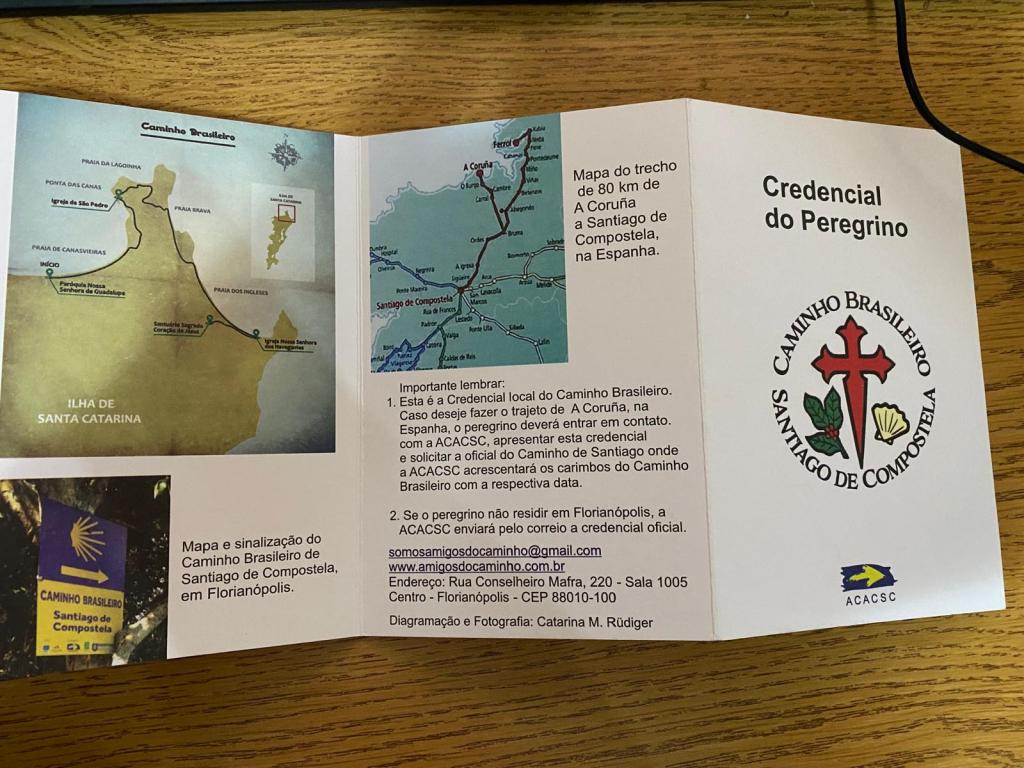
You say what now? There’s an official Camino on an island, off the Atlantic coast of Brazil? So, yes, it turns out that over half of Brazil’s population identifies as Catholic, and a few years ago, in 2017, a roughly 22 km long walk that visits four churches, was recognised by the Cathedral of Santiago de Compostela in Spain to be part of the historic route, and so can be included as part of the minimum 100kms needed to get your Compostela in Spain. That is, if you plan to do the Camino Inglés from A Coruña to Santiago, which is about 80kms.
At that time, I didn’t know that. I wasn’t concerned about the minimums as I was already thinking in longer distances. However, this would be a great opportunity to walk for a day, getting into the psychology of it, following the yellow arrows, along sandy beaches, over forested hills called morros, visiting each of the four churches along the way, and seeing if I could really do what I was planning to do in just a few months from now. Even if the test was just for one day. My theory was that if I could manage one day here I could manage two days there, and I could just keep walking each day until eventually I made it. I almost convinced my teenager to come with me but we had all taken turns suffering from a tummy bug over the last few days and it had just hit him the night before.
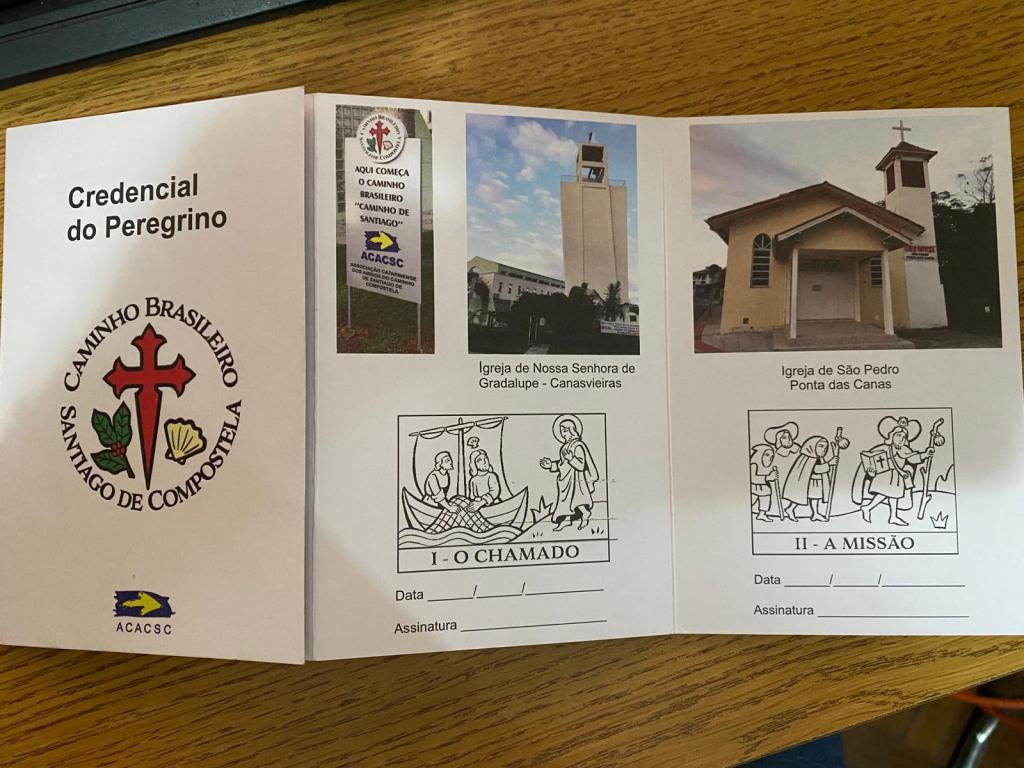
That same night I picked up my credential from the Our Lady of Guadalupe Church in Canasvieiras, as the office is only open in the afternoons. The credential cost about 20 reales or a bit less than USD 4.00, and it comes already stamped by each church. I guess the idea is not to need to have the churches open all the time to anticipate the arrival of pilgrims as it is a relatively unknown trail for now. Only the first and the last churches were open when I walked past. As this Brazilian credential is only for the Brazilian Camino, if you want to have it accredited to the Camino Inglés, the pilgrim has to contact Associaçāo Catarinense dos Amigos de Santiago de Compostela (ACACSC), present this credential, and request the official one for the Camino de Santiago, where ACACSC will add the stamps of the Camino de Santiago with the respective data. You can contact them here for more information: http://www.amigosdocaminho.com.br / contato@amigosdocaminho.com.br
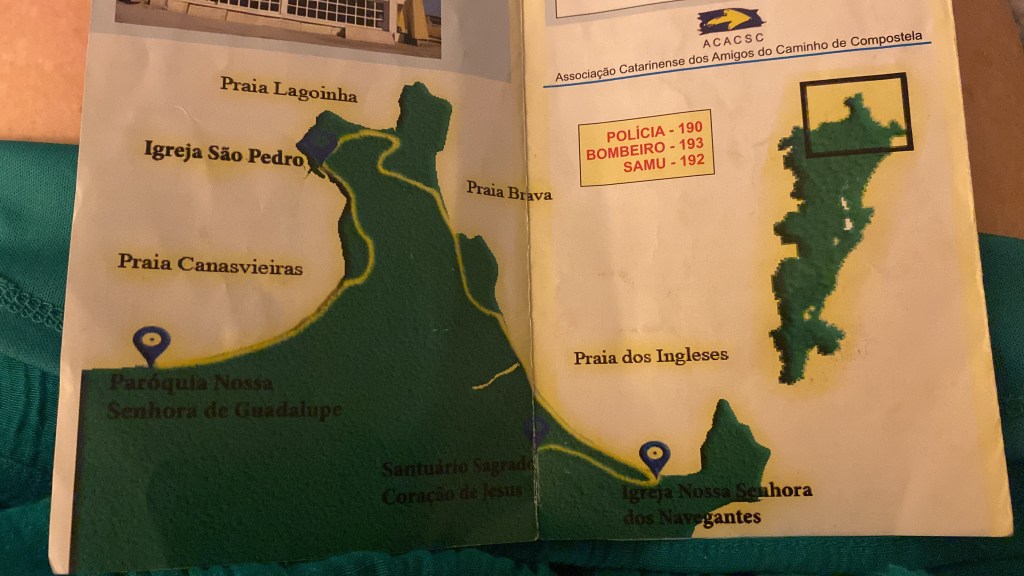
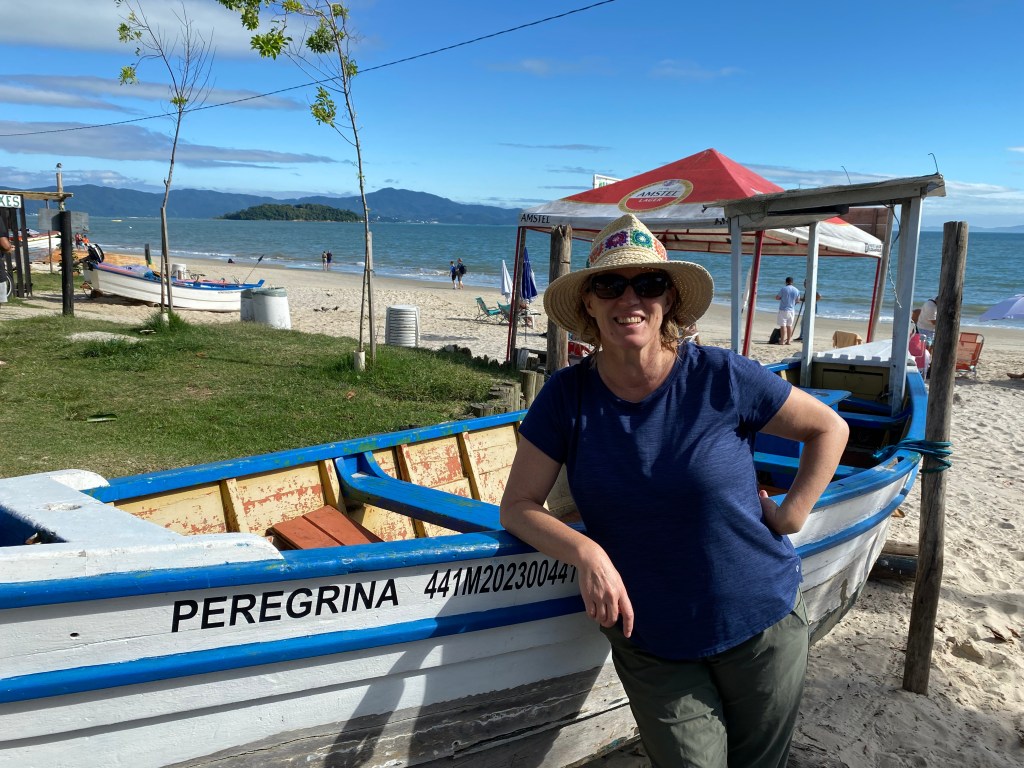
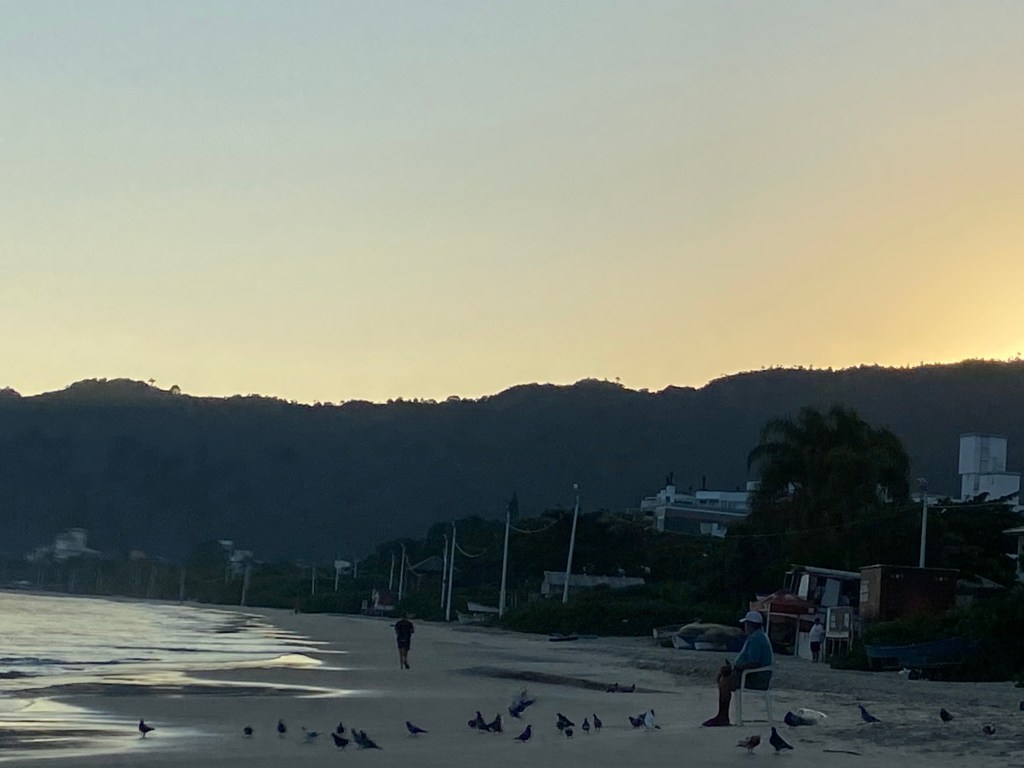
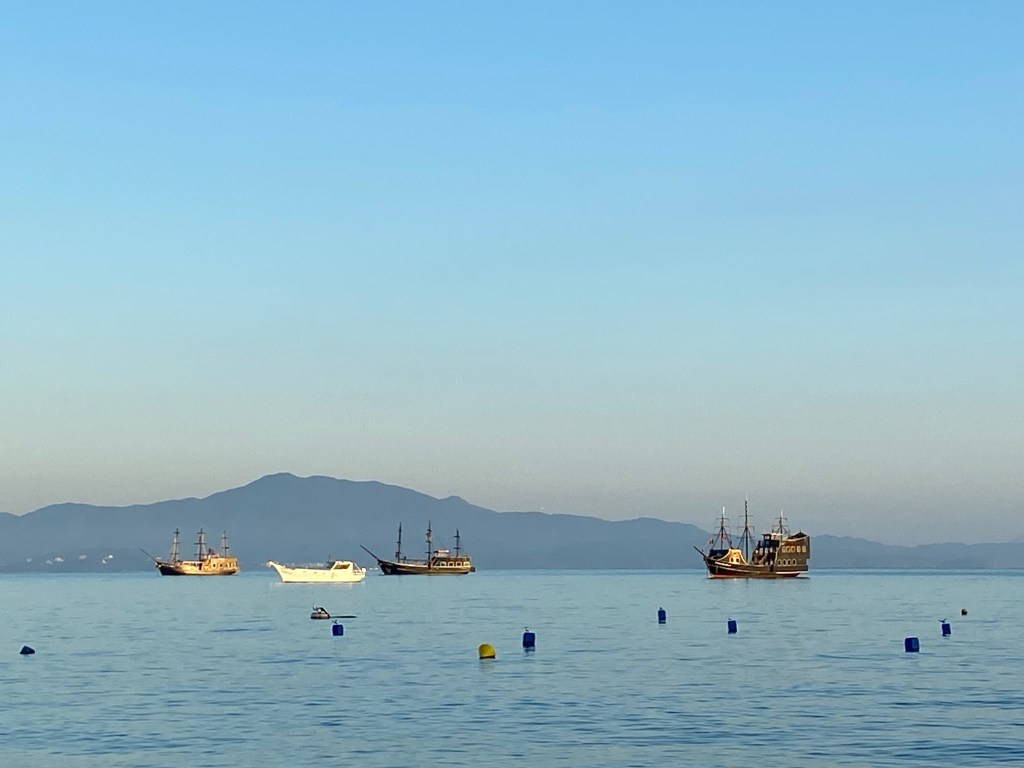
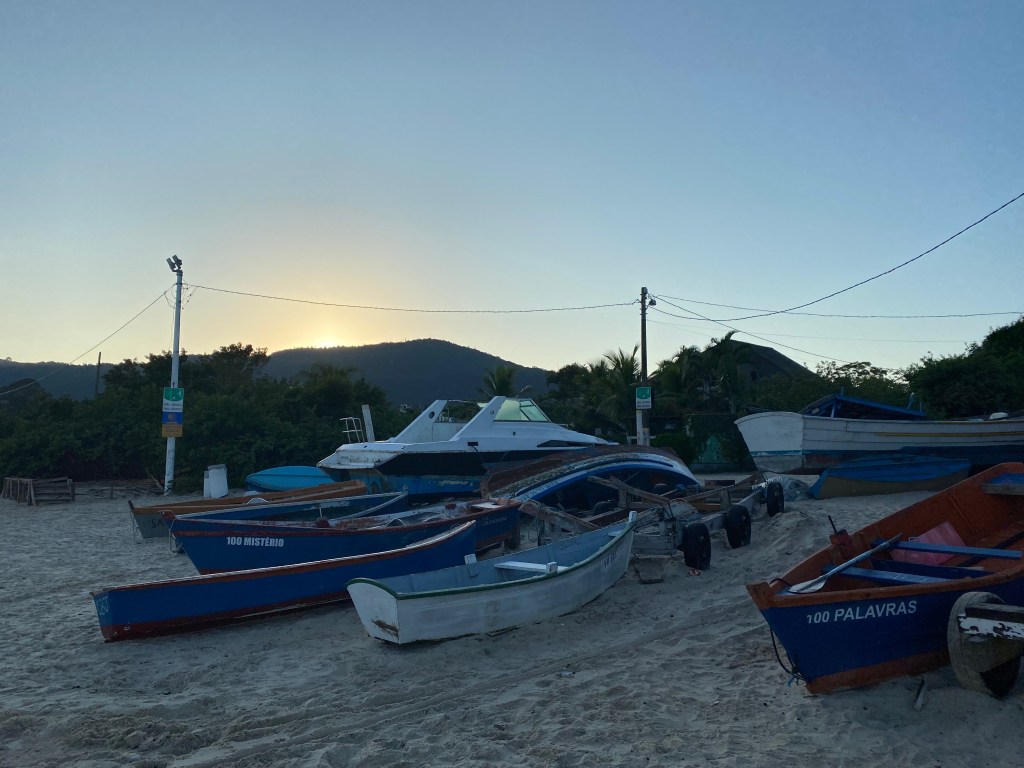
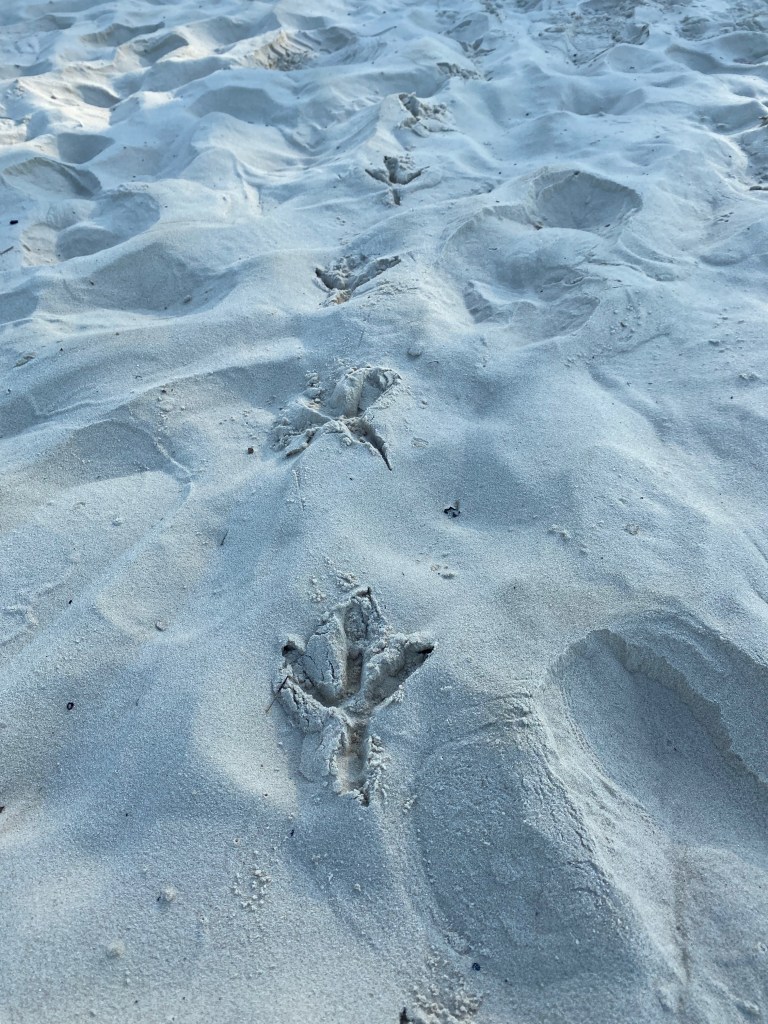
6:30 am the next morning saw my husband and me standing outside the first church. Hubby accompanied me for the first part of the walk along the beach, during which time we walked past this boat that we had seen the day before, aptly called “Peregrina,” and continued east along the coast. There was beach walking, bird spotting, and pirate ships in the bay to keep me amused until I turned off onto the road and walked through the suburbs for a while. Leaving early meant the sun was mercifully hidden behind a hill for most of the morning as I walked toward it.
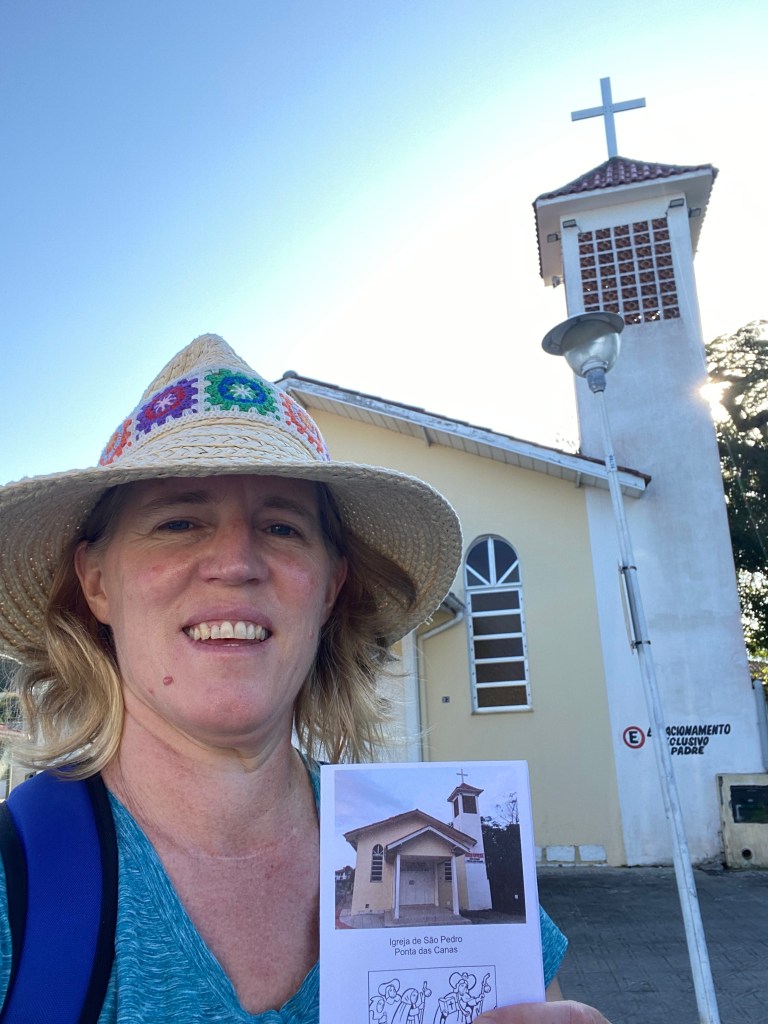
I changed from long trousers to shorts just before I got to the second church Igreja de São Pedro in Ponta das Canas. I carried plenty of water and snacks with me. I expected to be done by about 2pm and I guessed right that there would be plenty of shops and restaurants open along the way if I needed to get something extra. And the juice stands! So good!
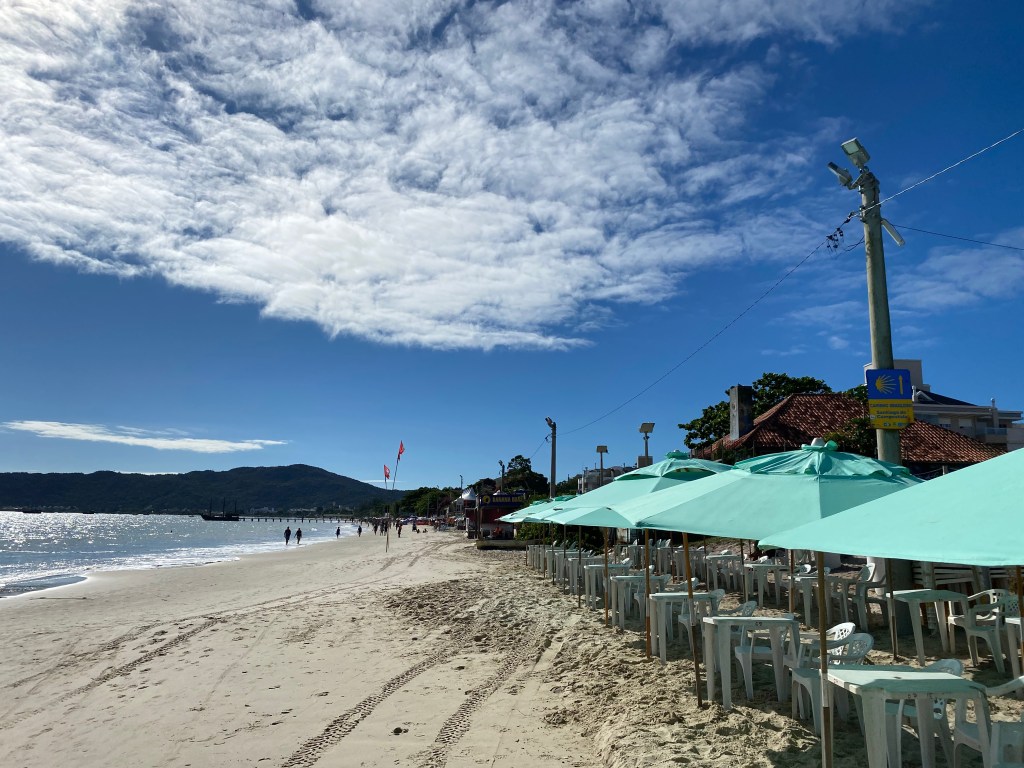
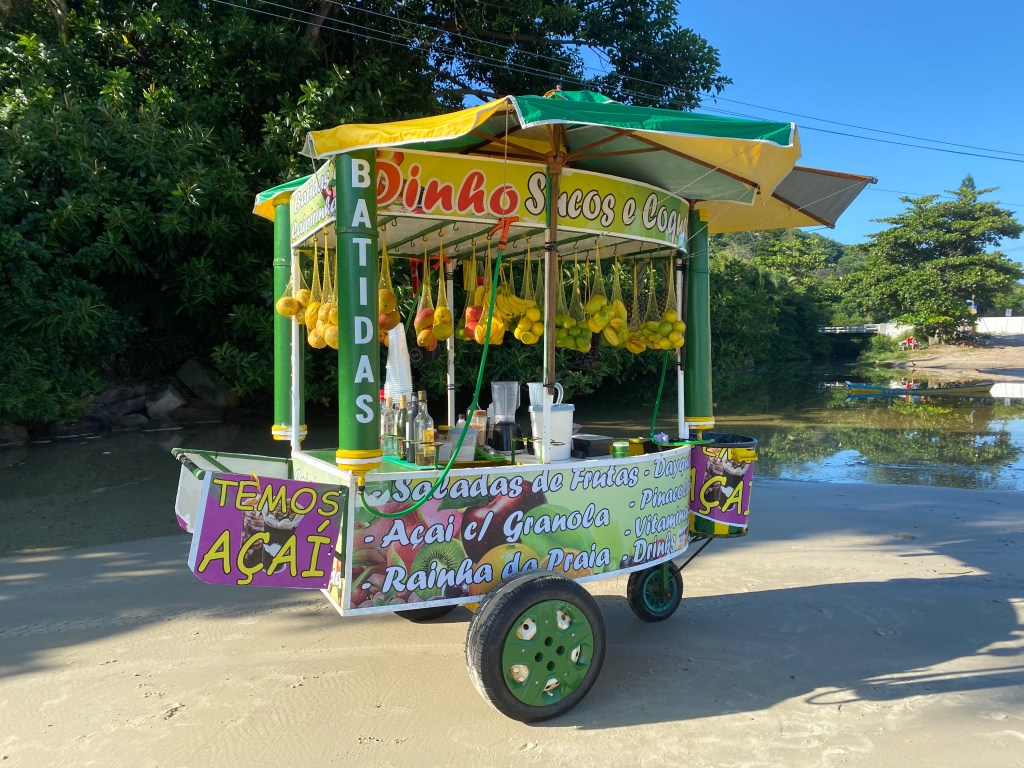
There are two hills to climb over. For the first, one can choose to ascend along the hill path, called “Trilha do Morro do Rapa” or the Rapa Hill Trail, or follow the road. The road presents an easier and shorter option. I opted for the longer, more scenic route. It’s about 3 kilometres of trail, takes about 1.5 hours and is not really “accessible”. So, you can hike it, but no wheels. It was largely exposed to the sun, it wasn’t that windy that day so the heat was intense, and at one point, I genuinely struggled with the conditions. I had to rest several times, and at one moment, I poured water onto a cloth to drape around my head and neck to maintain my composure until I could reach the cooler shade of the trees up ahead. For a brief moment, I questioned my sanity in taking this path and had to breathe through my emotions in order to consider my options logically. Alone and without the option of retreat, I knew I needed to find a way through this situation. I want to just add that I was going through perimenopause, was pretty unfit and carrying a few extra kilos so the struggle for me was real. Throughout the entire day, I met one younger couple travelling in the same direction as me and they were having no issues whatsoever! Nevertheless, I can confirm that the effort was worthwhile; the views were exceptional, the day was gorgeous, and it just felt great to be out walking.
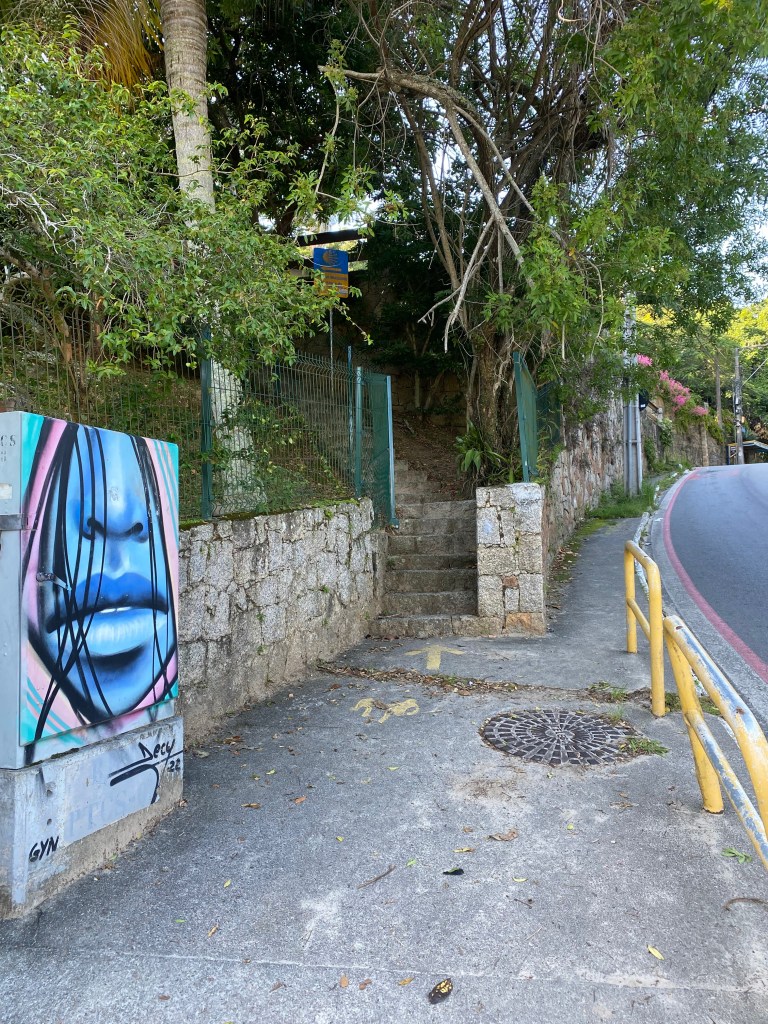
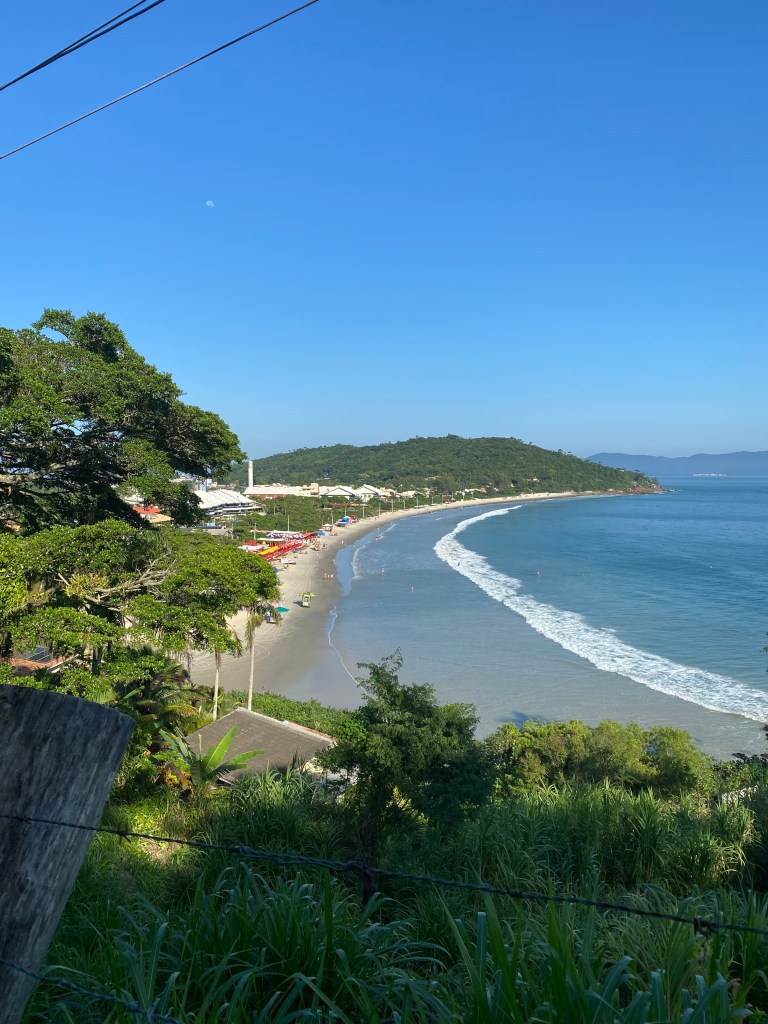
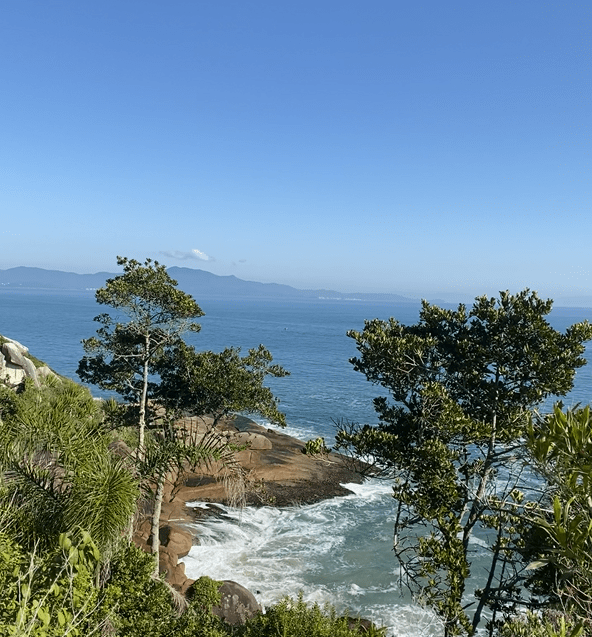
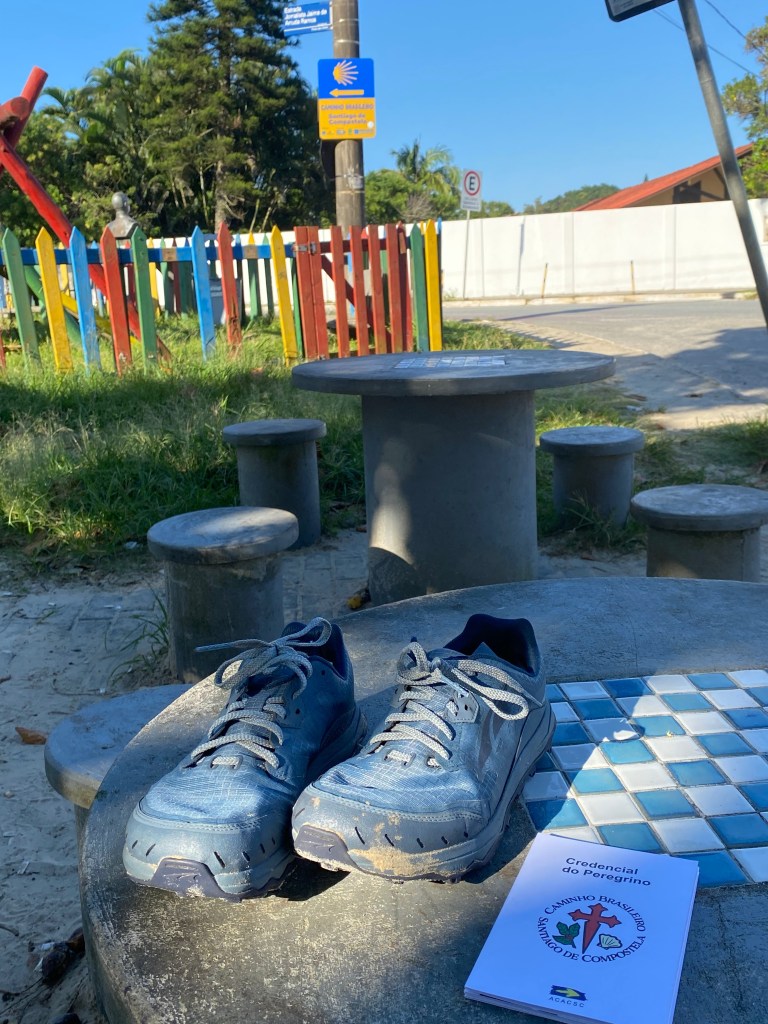
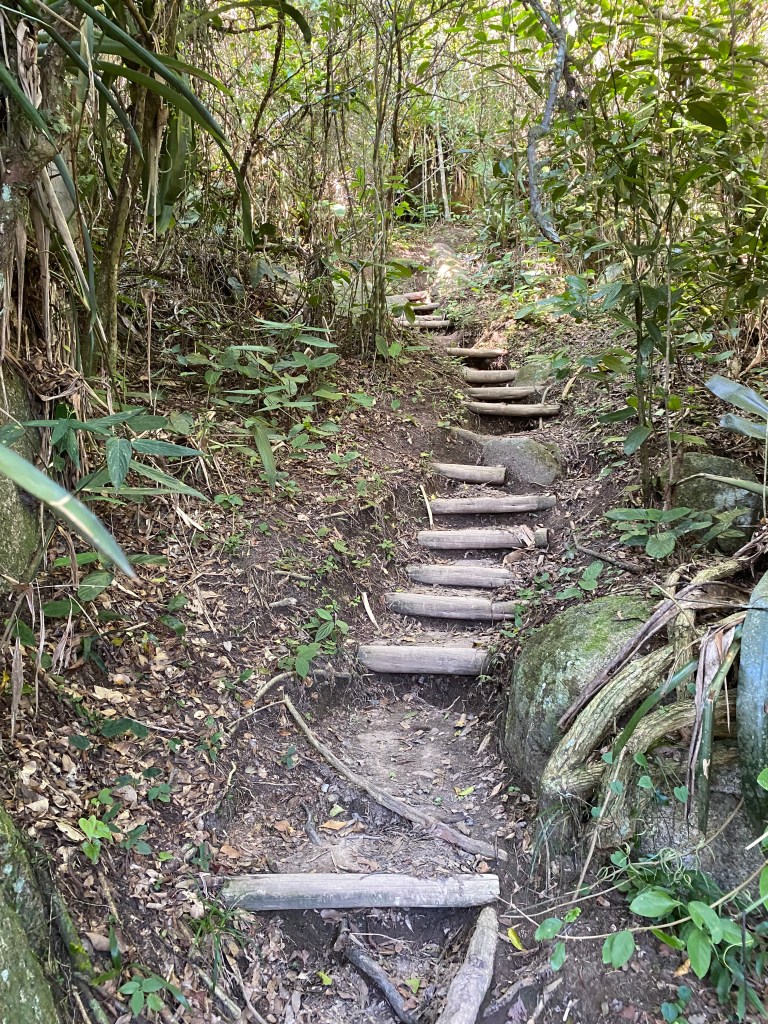
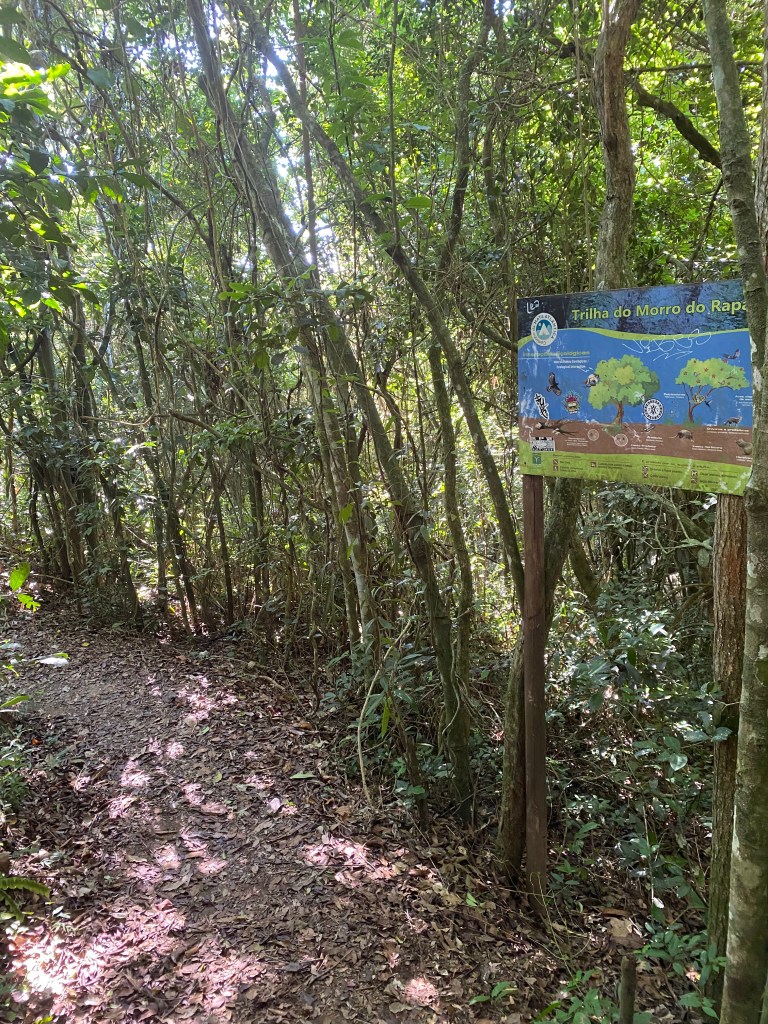
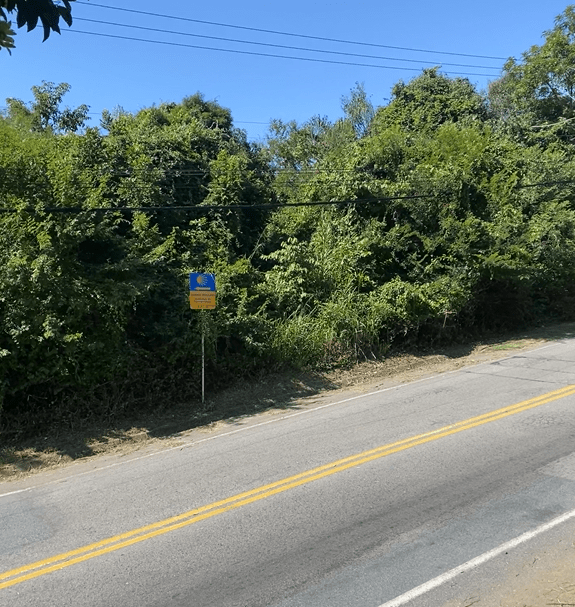
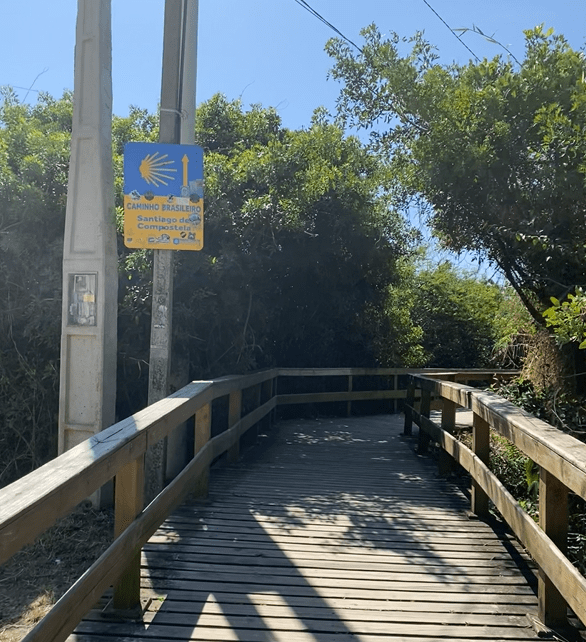
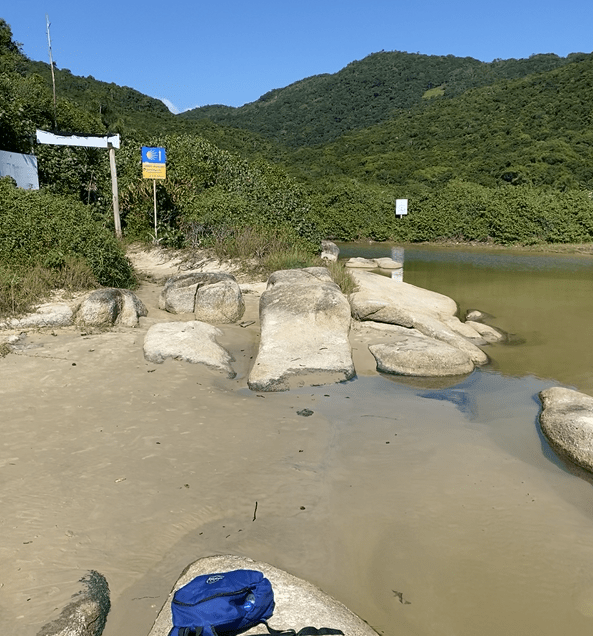
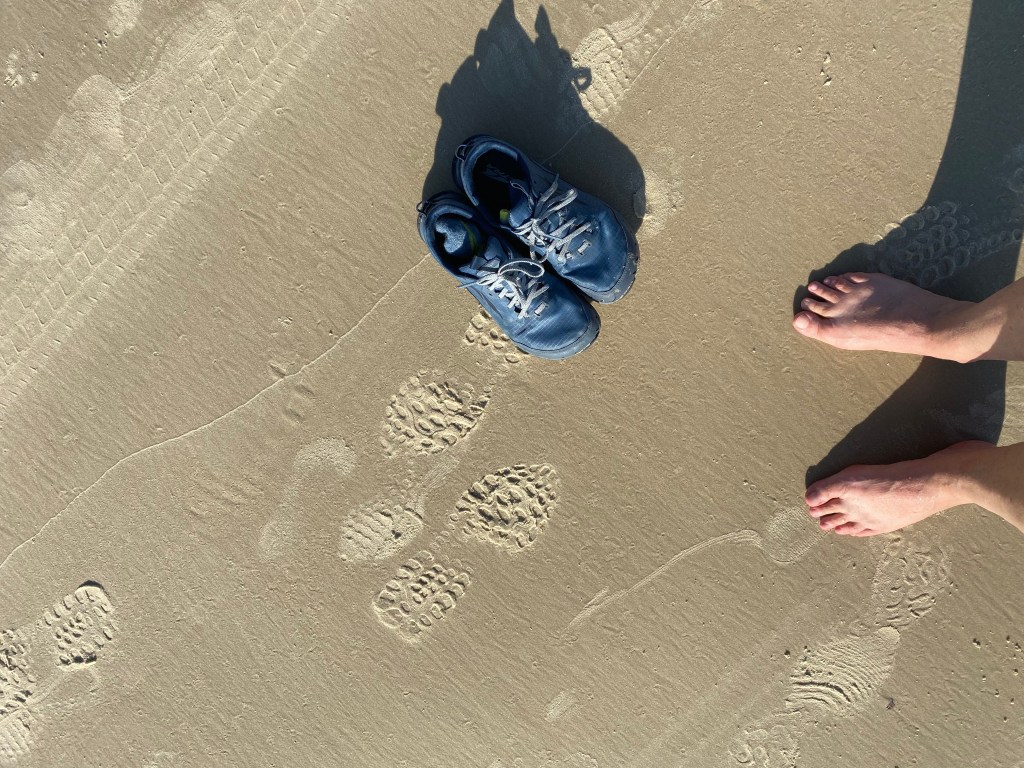
There is a variety of terrain to walk on, meaning I went from trail runners to bare feet to flip-flops and back again, depending on what was necessary. I actually thought about ending it at the end of Praia Brava and calling Hubby to come get me. The first hill had really shaken me up, and I didn’t know if I could repeat it. But after some yummy goodness, I decided to continue on and was glad I did. Taking the “Trilha Morro das Feiticeiras” I found that it was nowhere near as difficult a climb. It was a shady, cool, rock-hopping, dirt path experience with running creeks and little sound but the distant roar of breaking waves. There was some serious downhill, but it was all manageable; I certainly wouldn’t have wanted to come up the other way!
Making it out the otherside to the beach felt a little like culture shock. I had come from remote hill tracks, barely populated beaches and very few passers-by and now here I was at Praia dos Ingleses, the 4km stretch of beach that would lead me to the third church, which was absolutely full of people, music, and quiosques. People were on holiday! Enjoying life! Relaxing! What was I doing?!
Have you ever had that dream where you’re walking towards some far off point, and no matter how long you walk it just never seems to get any closer? That was Praia dos Ingleses for me. I walked in a straight line the whole time but I swear I walked past the same groups of people over and over again like they were some kind of an old style cartoon background. I even met someone I knew! My son’s rugby coach was on holiday and came up to say hello. It was really nice to see a friendly face after all that I had experienced that day, but I was still only half way along that beach! But all good things come to an end. I finally stepped off the sand and back onto the road up to the Igreja Nossa Senhora de Navigantes.
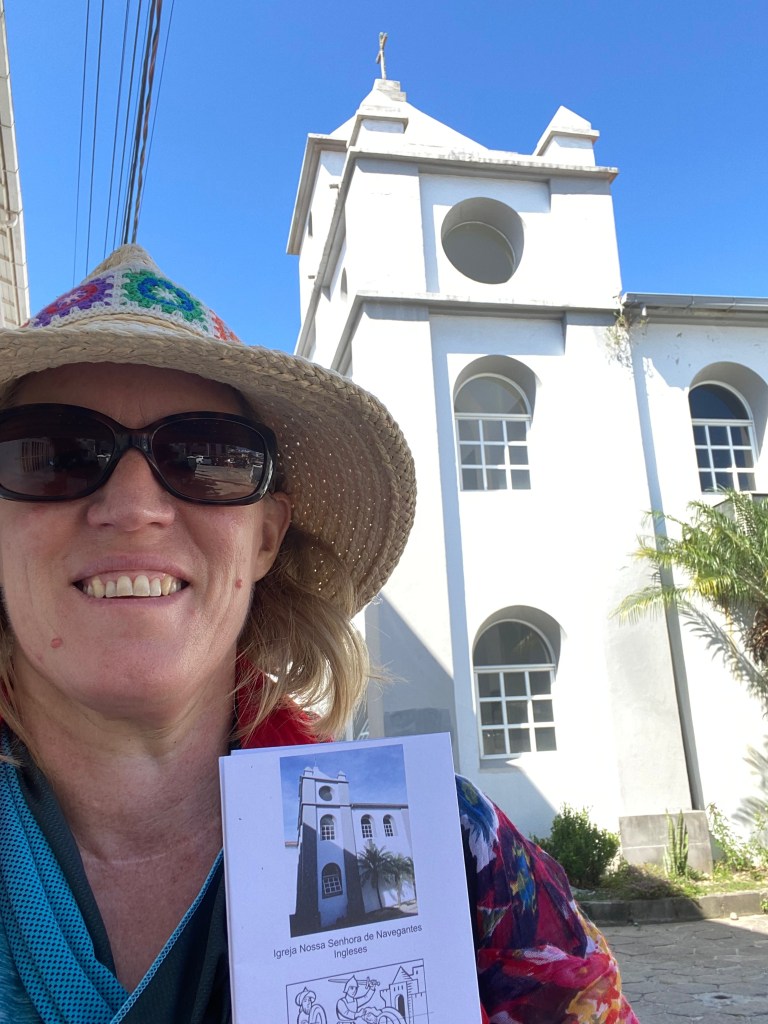
The final section is along some pretty busy roads and really tests your faith but just as you think you can’t walk anymore, there it is. The Shrine of the Sacred Heart of Jesus. There was not one other person in the church. No one to celebrate with. I felt like I had achieved something tremendous and wanted to cry it out to the heavens, but it was just me, on my own, albeit with my wide grin and my sandy feet.
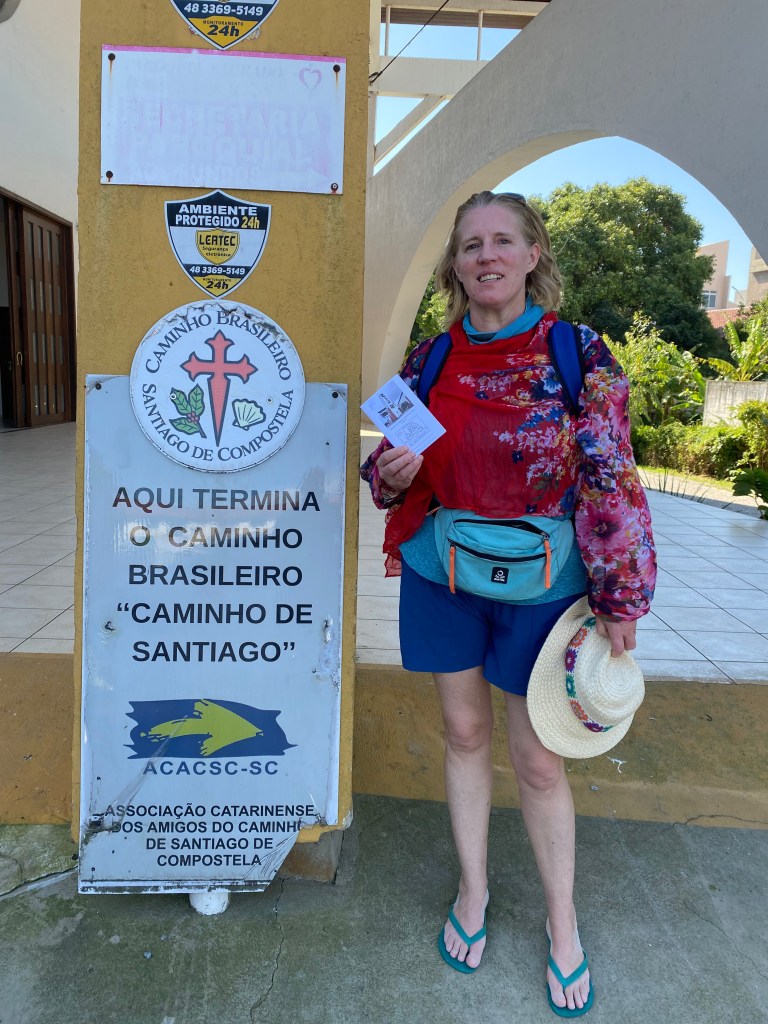
I think this walk may have been better if I hadn’t planned to be back by 2pm. If you took the whole day to do this, making the most of the beaches and swimming to cool off and eating at a quiosque de praia along the way it would be much more relaxing and doable. I was just too determined to get it done and dusted and prove something to myself. I think the key, for me, is to realise that my limitations are in my mind. I can actually do what I set out to do, with planning and yet still allowing room for spontaneity and to notice the small moments along with the big ones.
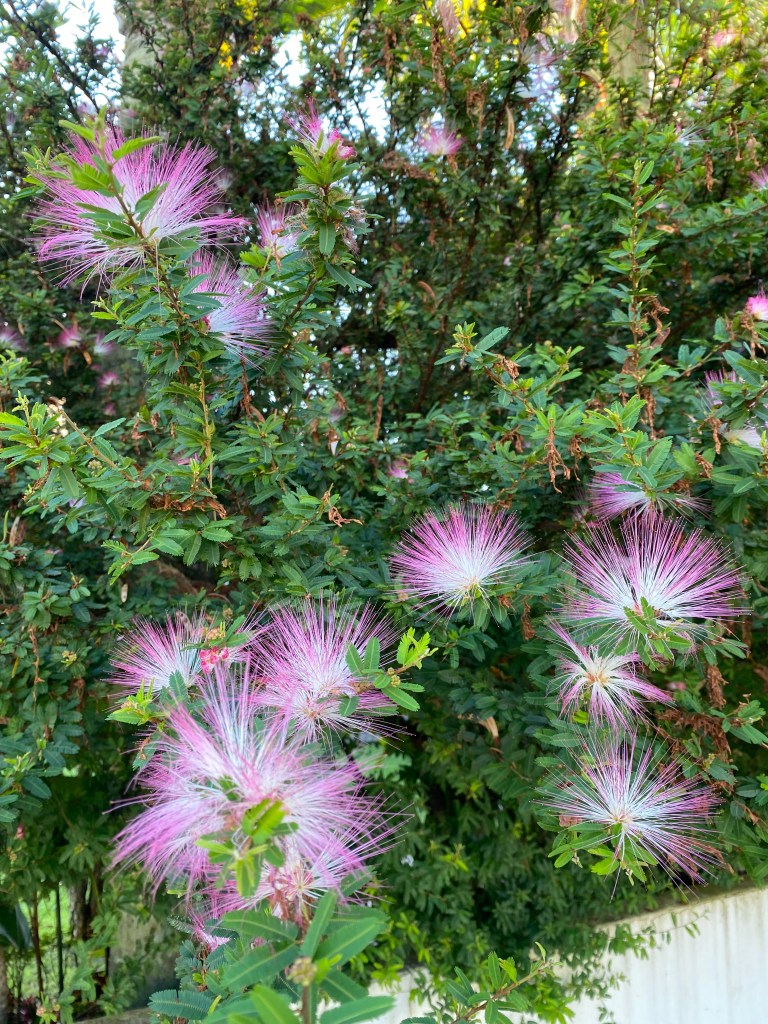
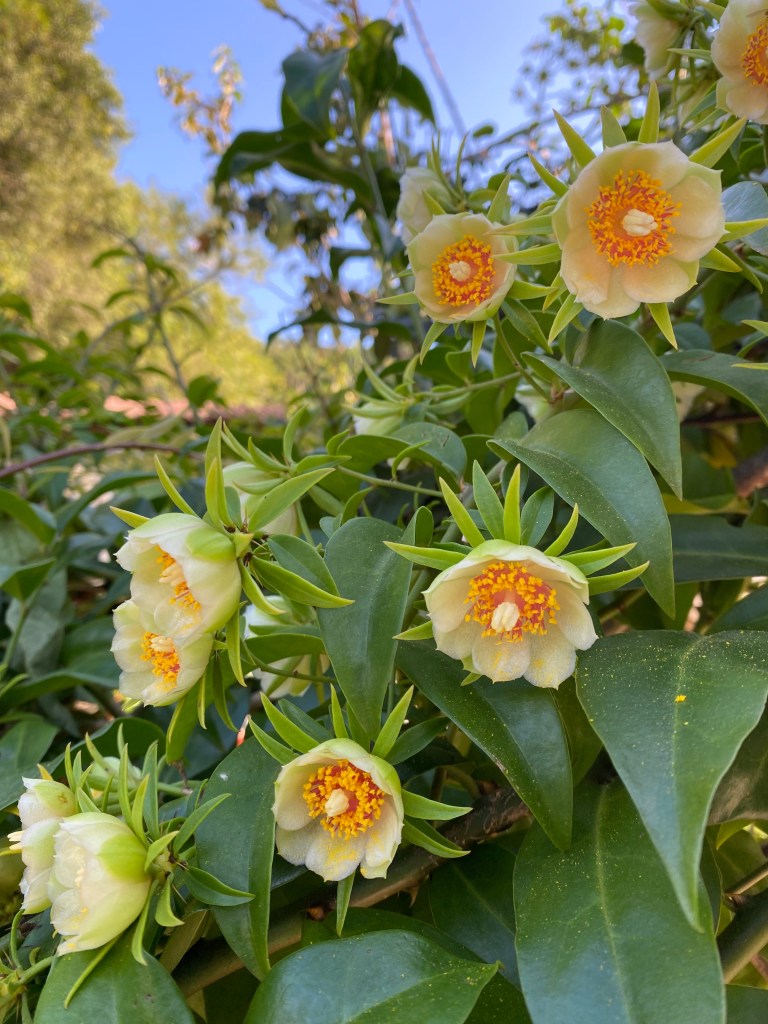
The four stamps in the Credencial speak of the journey of Saint James: The Call, The Mission, The Martyr, and the final Camino on which his remains were taken to Spain. Whether a pilgrimage like this is something you do to be closer to God or to better understand yourself, or for some other reason, it’s clear that there is something that the Camino teaches you. How to push your own limitations, how to recognize them, how to improve for next time, how to be patient, how to slow down and breathe, and just take each moment as it comes with grace and gratitude, and how to rejoice in the everyday.
I also knew I didn’t have any doubts anymore. I was going to Portugal. I had the basics figured out: the flights, the first night’s accommodation, and which way I wanted to walk. There were still so many unknown details that were up in the air, but I trusted that once I was there, the Camino would provide.
¡Buen camino, and I hope to see you along the way!
Saludos, Claire.
 Claire Goes Walking
Leave a comment